
Hilo de Polyester
A versatile synthetic fibre whose yarn structure makes the difference
- Synthetic fibre
- Chenille options
- Filament and staple
- Pure and blended yarns
- Recycled options
Polyester yarn appears in everything from smooth blends to plush chenille-style yarns for blankets and crochet. The fibre name describes the material, while the yarn's construction determines much of what you see and feel. Two yarns labelled 100% polyester may therefore produce very different stitch surfaces, fabric weights and drape. For a useful comparison, start with the type of yarn as well as its composition.
Leer más sobre polyester →Mostrar menos
From synthetic polymer to different yarn formats
CIRFS traces the first polyester to the UK in 1941. The most widespread textile form is polyethylene terephthalate, commonly abbreviated to PET. Polyester can be made as continuous filaments or as shorter staple fibres that are prepared for spinning. Texturing and other manufacturing choices allow the same fibre family to appear in several forms.
Recycled polyester can be made using recovered PET and other waste streams. The word recycled describes the source of some or all of the material, rather than changing polyester into a natural fibre. Check the actual percentage and any supporting product information; a polyester label alone says nothing about recycled content.
Why chenille requires a closer match
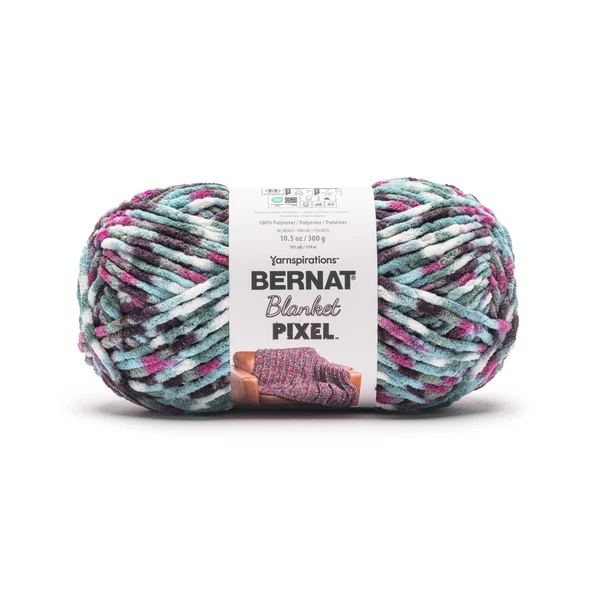
Chenille is a yarn construction with a pile surface, rather than another name for polyester. A familiar polyester example is Bernat Blanket, a chenille-style yarn with product-specific machine-washing and gentle tumble-drying instructions. Other polyester yarns can have a smoother surface and different care requirements.
When replacing a plush yarn, compare the pile, core, thickness and length per ball. Work a sample in the stitch pattern you intend to use, because the pile can hide details that would be clear in a smooth yarn. Check joins, ends and the finished fabric before calculating quantities. A smooth polyester yarn at a similar nominal weight will not recreate the same look simply because its fibre percentage matches. For blends, also consider the behaviour and care of every other component.
- Hilos
- 25
- 12 puros (≥90 %)
- Tensión de tejido
- 8–30
- pts / 10 cm
- Agujas
- 2–10 mm
- Longitud habitual
- 220 m
- por 100 g
Se suele mezclar con
Marcas con hilos de polyester
Todos los hilos de polyester
Preguntas sobre los hilos de polyester
Cuidados, tensión de tejido y consejos para sustituir hilos con polyester, junto con datos actualizados de nuestro catálogo.
Is every polyester yarn a chenille yarn?+
No. Polyester is the fibre; chenille describes a construction with a pile surface. Polyester can also be used in smooth yarns and blends, while chenille yarns can be made from other materials.
Is polyester the same as nylon or acrylic?+
No. They are separate synthetic fibre families. A yarn's construction can create some similar effects, but the fibre names should remain distinct when comparing composition.
Does recycled polyester behave like regular polyester?+
It is still polyester, but the finished yarn depends on the quality and processing of the recovered material and its construction. Compare the actual product specifications and swatch rather than assuming identical performance from the recycled label.
Can I machine wash a polyester blanket?+
Follow the yarn's care instructions and consider every yarn used in the blanket. Bernat Blanket, for example, specifies a delicate wash and gentle tumble drying, but that routine should not be generalised to every polyester product.