
Nettle yarn
Stem-derived plant fibre with a long textile history and varied character
- Plant bast fibre
- Stem-derived cellulose
- Long textile history
- Wool and plant fibre blends
- Preparation shapes the feel
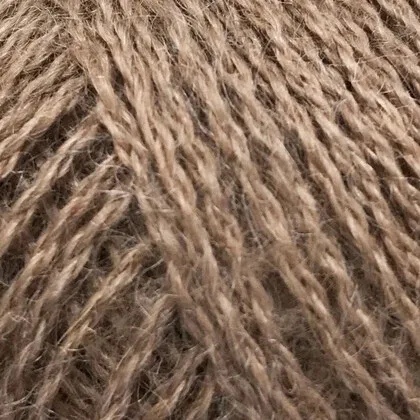
Nettle is a plant fibre with a textile history much older than its appearance in modern knitting yarns might suggest. Textile fibres are obtained from the stems, with species and processing methods contributing to differences in the final material. In handcraft yarn, nettle often appears alongside wool or other fibres. The complete blend tells you more about warmth, stretch and care than the nettle name on its own.
Read more about nettle →Show less
From nettle stems to textile fibre
Nettle belongs to the group of bast fibres, obtained from tissues in plant stems. Processing separates and cleans those fibres before spinning. The plant's leaves and stinging hairs are removed; finished nettle yarn does not sting in the way a living nettle does. Its surface can still feel crisp or textured, depending on fibre preparation and the yarn around it.
Different nettle plants have been used for textiles. European stinging nettle, Urtica dioica, and Himalayan giant nettle, Girardinia diversifolia, are distinct examples. The latter is associated with traditional allo fibre production in the Himalayas. Archaeological research has also identified nettle in an approximately 2,800-year-old Bronze Age textile from Lusehøj in Denmark, providing a specific historical example of its use.
Choosing nettle blends for knitting and crochet
Preparation makes a substantial difference to softness and texture. A hand-processed bast yarn should not be expected to feel like a finely prepared blend. Nor does the plant's prickly reputation describe every finished yarn. For example, ONION's Nettle Sock Yarn combines 70% superwash wool with 30% nettle fibres, putting the ingredient into a predominantly wool fabric.
When substituting, compare the full composition, strand structure and washed sample. If the original yarn is a wool and nettle blend, replacing it with pure cotton will change more than the plant-fibre component. Check stitch definition, recovery and suitability for the intended wear. Follow the specific care label, particularly when animal fibres are present. A nettle ingredient does not make an entire blend animal-free, and it does not establish how the fibre was grown or processed.
- Yarns
- 1
- 0 pure (≥90 %)
- Gauge
- 26–26
- sts / 10 cm
- Needles
- 3–3.5 mm
- Typical length
- 350 m
- per 100 g
All nettle yarns
Questions about nettle yarn
Care, gauge and substitution tips for nettle, combined with live data from our catalogue.
Does nettle yarn sting?+
Finished nettle yarn does not retain the living plant's stinging mechanism: leaves and stinging hairs are removed during processing. It can still have a crisp or textured feel, so try the actual yarn if you are choosing it for close contact with skin.
Is nettle yarn made from nettle leaves?+
Textile nettle fibre comes from the stems, where the bast fibres are found. Processing separates the usable fibres before they are prepared and spun. Leaves are not the material spun into conventional nettle bast yarn.
Are all nettle yarns made from the same plant?+
No. European stinging nettle and Himalayan giant nettle are distinct textile sources, and processing also varies. Where provenance matters, look for a named species or supplier information rather than assuming one origin from the word nettle.
Is nettle yarn suitable for socks?+
Some yarns are specifically developed for socks, including ONION's wool and nettle blend. That does not establish the same suitability for every nettle yarn. Compare the full blend, construction and fabric density, and follow the pattern's tension and the yarn's care instructions.