
Linen yarn
Flax-stem fibre for textured yarns and fabrics with easy movement
- Plant fibre
- Made from flax
- Bast fibre
- Summer knitting
- Pure and blended yarns
Linen yarn is made from flax, a plant whose stems contain the fibres used in textiles. In knitting and crochet it offers a distinctive alternative to soft wool: often textured in the ball, with a fabric that can suit relaxed tops, open stitch patterns and summer layers. Pure linen and linen blends have different characters, so the percentage, spinning and finishing all deserve attention when comparing yarns.
Read more about linen →Show less
How flax becomes linen
Flax has an established textile tradition in Western Europe, where growing and fibre processing are closely linked. Unlike cotton, whose fibre surrounds the seeds, linen comes from the outer layers of the plant's stem. It is a bast fibre.
After harvesting, retting loosens the fibres from the woody parts of the stems. Scutching separates out the fibre, and hackling combs and aligns it before preparation for spinning. These stages help explain why linen's identity includes both agricultural conditions and processing expertise. Long and short fibres can be used in different ways, contributing to different yarn surfaces.
Planning a linen garment
Linen is associated with moisture absorption and breathable fabrics, but the openness and weight of your stitches still shape the result. A dense crochet fabric and an open knitted top made from the same yarn will feel and hang differently. Linen also offers less natural spring than wool, which matters when a design relies on close-fitting ribbing or elastic recovery.
Wash and dry a sample before judging the feel and dimensions. The yarn in the ball does not always represent the surface of the finished, laundered fabric. For a substitute, compare drape, stitch definition and metres per gram, then consider whether the garment needs a change in construction or fit. A blend may make the yarn feel different to work with, but its other fibres also affect washing and recovery. Choose it for the fabric it produces rather than assuming every linen-containing yarn behaves like pure linen.
- Yarns
- 42
- 6 pure (≥90 %)
- Gauge
- 12–30
- sts / 10 cm
- Needles
- 2–8 mm
- Typical length
- 250 m
- per 100 g
Often blended with
Brands with linen yarns
All linen yarns
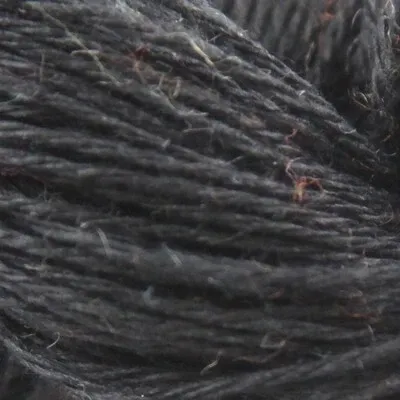
Fibra Natura
Flax
100% linen
- 24
- sts / 10 cm
- 250
- m/100g
- 3.75
- mm
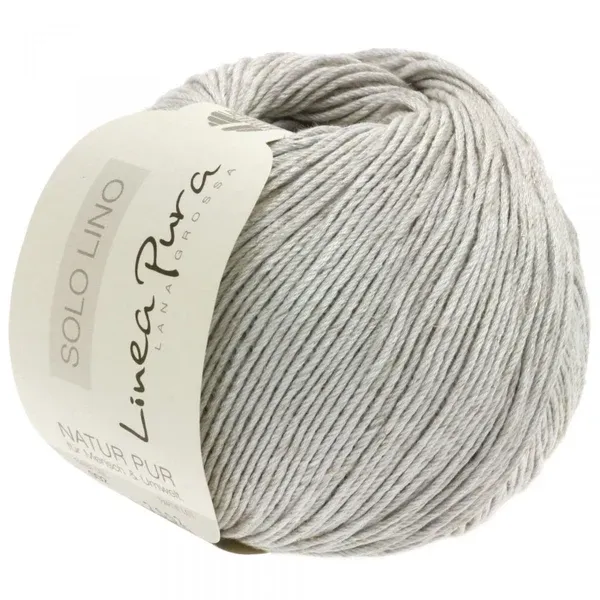
Lana Grossa
Solo Lino
100% linen
- 25
- sts / 10 cm
- 240
- m/100g
- 3.5–4
- mm
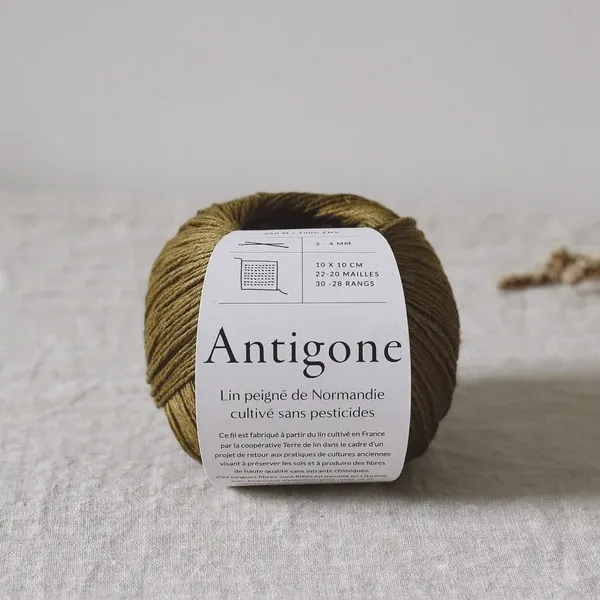
De Rerum Natura
Antigone
100% linen
- 22
- sts / 10 cm
- 260
- m/100g
- 2.5–3.5
- mm
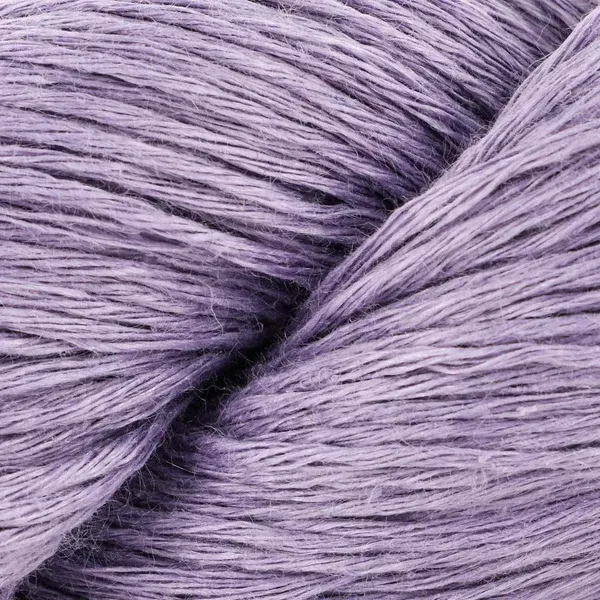
Berroco
Modern Linen
100% linen
- 20
- sts / 10 cm
- 250
- m/100g
- 3.75
- mm
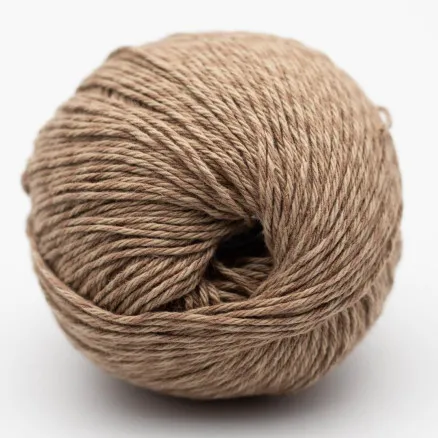
BC Garn
Allino
50% linen · 50% cotton
- 22
- sts / 10 cm
- 250
- m/100g
- 3.125
- mm
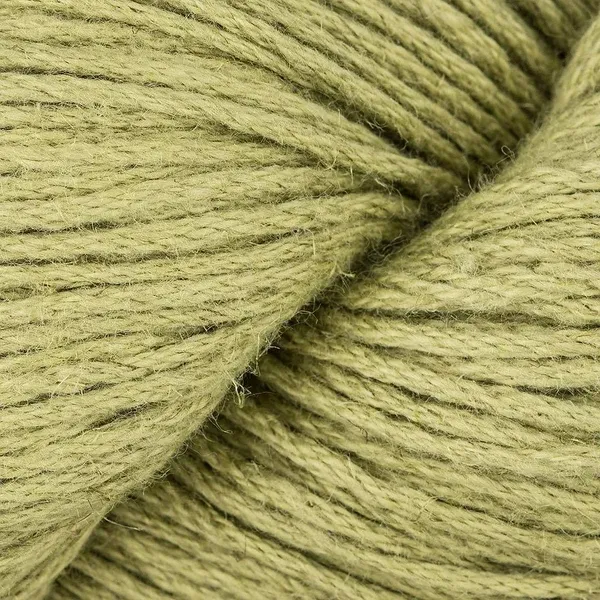
Rowan
Creative Linen
50% linen · 50% cotton
- 21
- sts / 10 cm
- 200
- m/100g
- 4.5
- mm
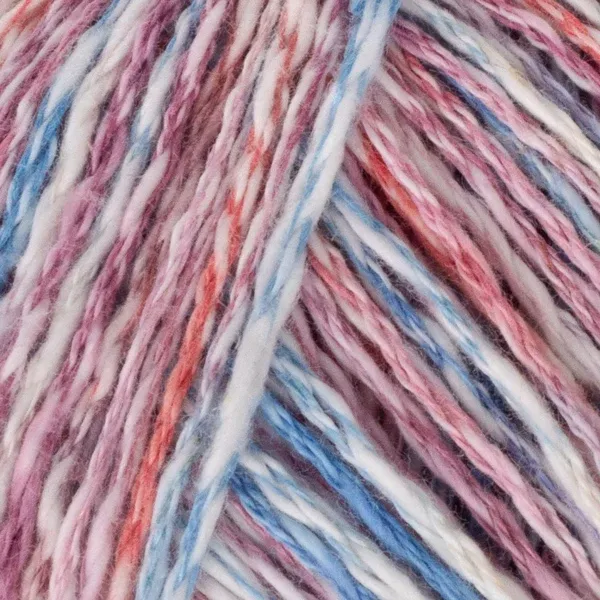
Juniper Moon Farm
Zooey Spray
60% cotton · 40% linen
- 24
- sts / 10 cm
- 260
- m/100g
- 3.25
- mm
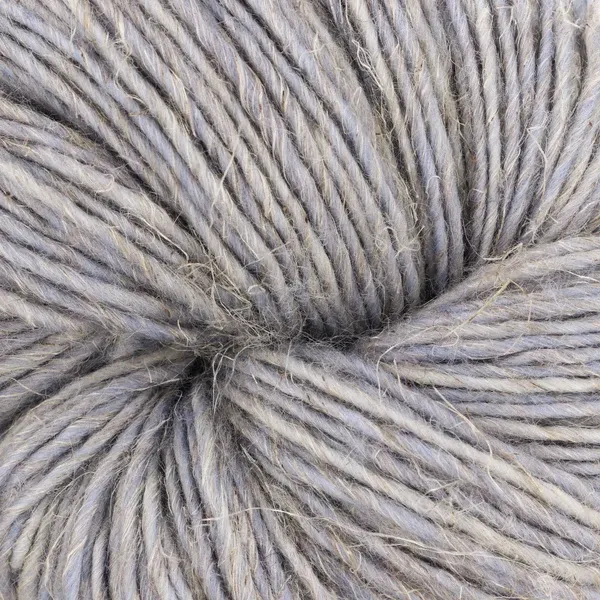
Manos del Uruguay
Milo
65% merino · 35% linen
- 22
- sts / 10 cm
- 347
- m/100g
- 3.5
- mm
Patons
Linen Yarn (100g/3.5oz)
65% cotton · 35% linen
- 24
- sts / 10 cm
- 251
- m/100g
- 4
- mm

Scheepjes
Linen Soft
47% cotton · 27% linen · 26% acrylic
- 22
- sts / 10 cm
- 270
- m/100g
- 3.5
- mm
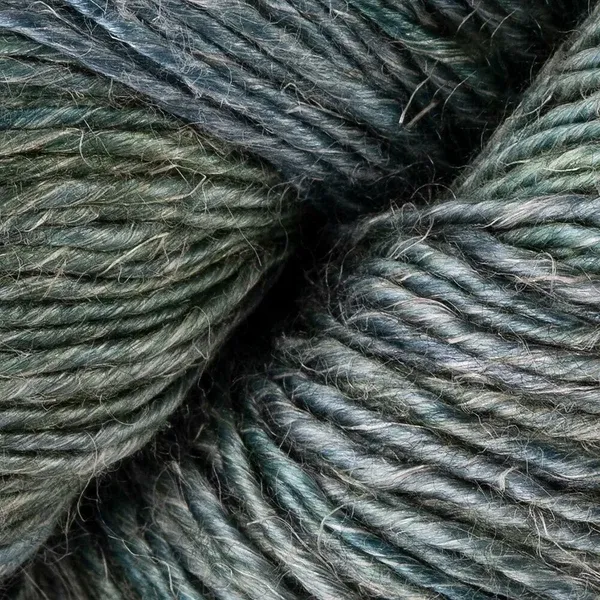
Malabrigo
Susurro
50% silk · 25% linen · 25% merino
- 28
- sts / 10 cm
- 297
- m/100g
- 3.5
- mm
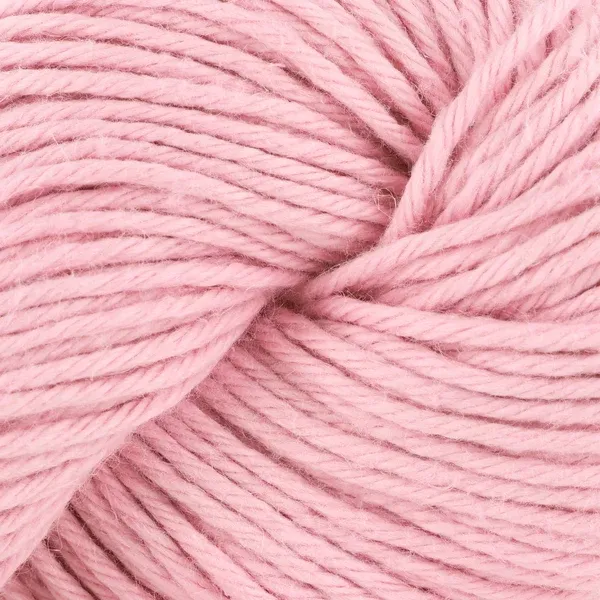
Valley Yarns
Leverett
70% cotton · 30% linen
- 20
- sts / 10 cm
- 200
- m/100g
- 3.75
- mm
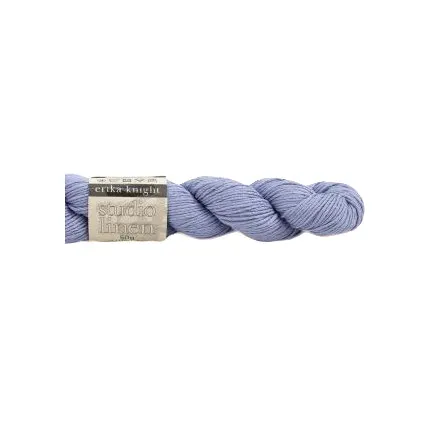
Erika Knight
Studio Linen
85% bamboo · 15% linen
- 21
- sts / 10 cm
- 240
- m/100g
- 4
- mm
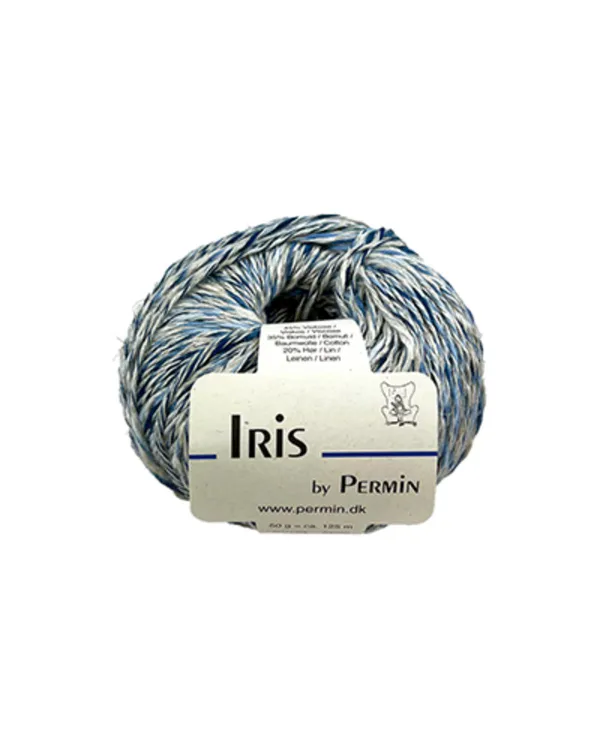
Permin
Iris By Permin
45% viscose · 35% cotton · 20% linen
- 20
- sts / 10 cm
- 250
- m/100g
- 3.5–4
- mm
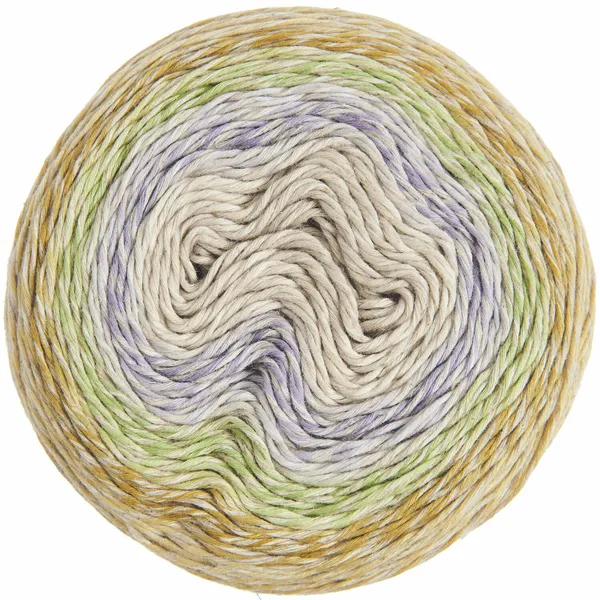
Rico Design
Creative Cotton Linen Cake
50% acrylic · 34% cotton · 16% linen
- 24
- sts / 10 cm
- 240
- m/100g
- 3
- mm
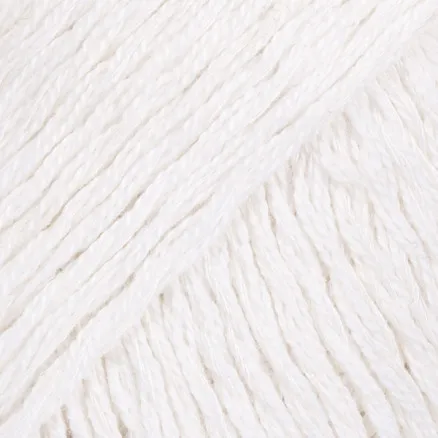
DROPS Design
Belle
53% cotton · 33% bamboo · 14% linen
- 21
- sts / 10 cm
- 240
- m/100g
- 4
- mm
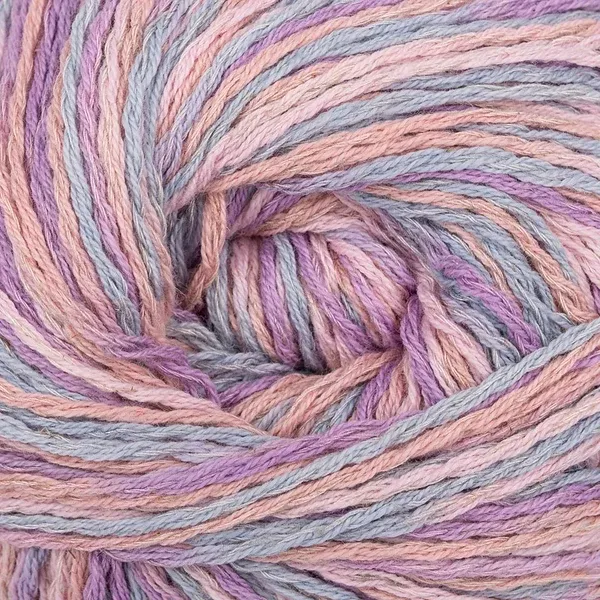
King Cole
Linendale Reflections DK
57% cotton · 30% viscose · 13% linen
- 22
- sts / 10 cm
- 240
- m/100g
- 4
- mm
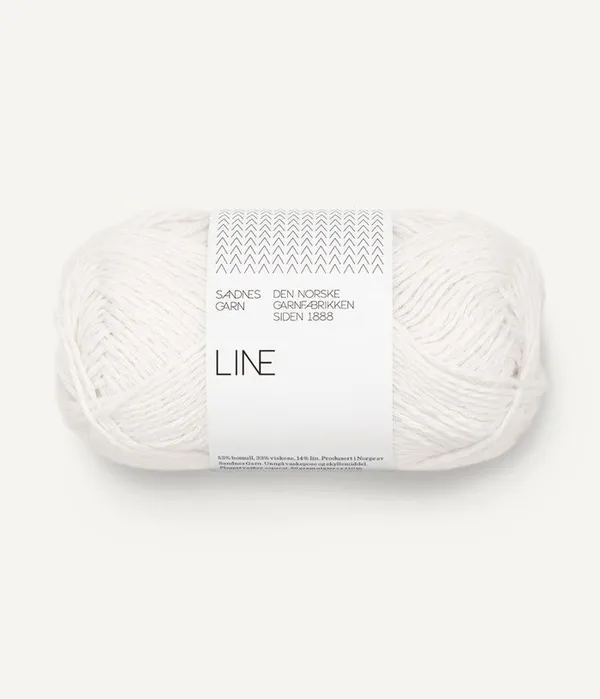
Sandnes Garn
Line
53% cotton · 33% viscose · 14% linen
- 20
- sts / 10 cm
- 220
- m/100g
- 4
- mm
King Cole
Linendale DK
57% cotton · 30% viscose · 13% linen
- 22
- sts / 10 cm
- 240
- m/100g
- 4
- mm
Questions about linen yarn
Care, gauge and substitution tips for linen, combined with live data from our catalogue.
Are linen and flax different fibres?+
Flax is the plant, and linen is the familiar textile name for yarn and fabric made from its fibre. A linen yarn's fibre originates in the stems rather than around seeds, as cotton does.
Why can linen yarn feel firm before it is washed?+
Fibre preparation, twist and finishing influence its handle. Assess a washed sample before deciding whether it suits your project. Different linen yarns can feel quite different, so there is no single guaranteed amount of softening.
Can linen replace cotton in a pattern?+
It can if the sample gives the right gauge, weight and drape. Compare texture and recovery as well as thickness. A linen blend may behave differently from both pure linen and pure cotton.
Is linen always a summer fibre?+
It is popular in lighter garments, but fabric weight, stitch density and blends broaden its uses. An open linen top and a dense linen-containing textile will not offer the same comfort simply because they share a fibre name.